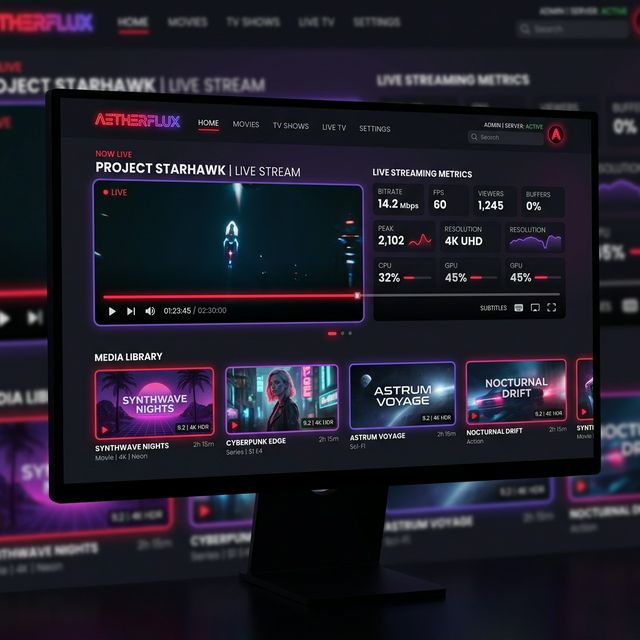
Commercial streaming platforms often limit file formats or require heavy subscription fees for high-bitrate content. Generic media servers (like Plex) can be resource-heavy. I needed a lightweight, 'Go-first' solution that could handle 4K transcoding and stream to multiple devices simultaneously without bottlenecking the CPU.
The core engine is written in Go, leveraging its native concurrency model (Goroutines) to manage multiple FFmpeg child processes. Instead of serving raw MP4 files, the system dynamically segments video into HLS (HTTP Live Streaming) chunks (.ts files). This allows for adaptive bitrate-style behavior and instant seeking without downloading the entire file first.
“Built a production-grade media server capable of streaming 4K content with sub-2-second initial buffering. The system maintains a minimal memory footprint (<50MB RAM at idle) due to Go's efficient binary compilation.”